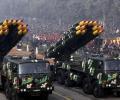
After lagging behind the broader market over the past three and six months, defence sector stocks have regained ground, reversing their performance from the past month. Concerns about slowing order inflows, execution hurdles, supply chain disruptions, and high valuations had weighed on the sector.

Growth in corporate profits needs to be commensurate with wages to boost the economy, Economic Survey 2024-25 said, noting that sharp disparities between the two pose risk to the economy by curbing demand. The document tabled in Parliament on Friday noted that while the labour share of GVA (gross value added) shows a slight uptick, the disproportionate rise in corporate profitsredominantly among large firmsaises concerns about income inequality.

The government is likely to take a call on the timing of LIC initial public offering within this week, a senior official said. The sale of 5 per cent stake or 31.6 crore shares in the country's largest insurer was originally planned for in March, but was postponed in view of the geopolitical tension. The government has time till May 12 to launch the IPO without filing fresh papers with markets regulator Sebi. The official said it would be a tough call to decide whether to go ahead with the retail and domestic investor demand or to wait for geopolitical tension to ease and FIIs to return to market.

'Subject to any worldwide economic collapse.'

Uttar Pradesh is on high alert as Holi coincides with Friday namaz, prompting authorities to implement additional security measures in the state, including enhanced patrolling, surveillance drones, and strict monitoring of social media. The decision follows controversial remarks made by some politicians and a police officer, raising concerns about potential incidents in mixed population localities. The administration has also decided to cover mosques to prevent them from being stained with colors, while several mosques have shifted the timing of Friday prayers.

If you disregard history and are ready to watch Kesari 2 purely as an entertainer, you are definitely going to enjoy it, feels Utkarsh Mishra.

On the 134th birth anniversary of the chief architect of the Indian Constitution, Utkarsh Mishra revisits three incidents from Dr B R Ambedkar's life that lay bare the deeply entrenched nature of caste prejudice.

'He surprised us by telling us he wanted to make a career in acting.' 'We were scared since we knew nothing of this profession but then, he landed a role in Mira Nair's Monsoon Wedding.' 'After seeing him holding his own on screen, we decided to let the boy pursue his passion.'
Digital financial services firm Paytm has received market regulator Sebi's approval for its Rs 16,600 crore initial public offer, a source involved in the process said on Friday. The company expects to hit the bourses by the end of this month and is planning to skip the pre-IPO share sale rounds to fast-track listing.

Draft Red Herring Prospectus (DRHP) filing continued to be robust in October, signifying the optimism in the initial public offer (IPO) market despite the recent turbulence in equities. In October, 17 companies filed their offer documents for IPOs. The rush in filings has made August-October 2023 the best three-month period for DRHP filings since July-September 2021.
DLF Ltd on Friday said it was reviewing an order from the country's market regulator that fined the company and its top management $8.4 million.

'While investors need to be prepared for making some losses, they should not lose big money chasing euphoria amid fear of missing out.'

Digital firm One97 Communications, which operates under Paytm brand name, on Thursday said its IPO will open on November 8 for subscription in the price band of Rs 2,080-2,150 apiece, which implies that the firm's valuation stands at Rs 1.44 lakh crore-Rs 1.48 lakh crore. The initial public offer (IPO) subscription will close on November 10.

'The success of one or two IPOs does not dictate whether the upcoming IPOs will be successful or not, but it certainly indicates that the markets and investors are enthusiastic about startup IPOs.'

Acutely conscious that he's left with less than four years to create his legacy, Trump is undoubtedly a man in a hurry, observes Ambassador M K Bhadrakumar.
JM Financial on Wednesday said it had a "careful and detailed review" of the Reserve Bank's order imposing restrictions on the company's financing business and asserted that there was "no material deficiencies" in its loan sanctioning process. The Reserve Bank on Tuesday imposed restrictions on JM Financial Products Ltd after it found the company indulged in various manipulations, including repeatedly helping a group of its customers to bid for various IPOs (initial public offerings) by using loaned funds. "After careful and detailed review of the order issued by the RBI on the action against JM Financial Products Ltd, we strongly believe that there have been no material deficiencies in our loan sanctioning process.

The spike in volatility, amid election uncertainty, has done little to dent the confidence of retail investors, shows demat account addition and equity mutual fund (MF) investment data. In May, investors opened a net 3.6 million demat accounts, taking the total to 158 million. MF data released on Monday pegged the net inflows into equity schemes and SIP investments at new record highs of Rs 34,697 crore and Rs 20,904 crore, respectively.
The government has amended rules of the Foreign Exchange Management Act (FEMA), paving the way for up to 20 per cent foreign direct investment in the insurance behemoth LIC. The government is planning to dilute its stake in LIC through the the Initial Public Offering (IPO). LIC in February had filed the Draft Red Herring Prospectus (DRHP) before the markets regulator Sebi for the IPO.

'The scrapping of import duty would help Indian companies compete in international markets, thus paving the way for India becoming a space manufacturing hub for the world.'

Benchmark indices--Sensex and Nifty--were 0.7-0.8 per cent higher from the Saturday closing. Among the widely-tracked Nifty 50 stocks, 39 advanced and the rest 11 declined at the opening bell. Among the individual stocks, Cipla, ICICI Bank, Sun Pharma, Power Grid Corp, and Bharti Airtel were the top five gainers, while Asian Paints, Hindustan Unilever, Britania, HDFC Bank, and BPCL the losers, NSE data showed. On Monday, Indian stock exchanges were closed for trading on the occasion of Pran Pratistha of Ram Temple in Ayodhya.
Business process outsourcing company Genpact has set the ball rolling for a $600 million (around Rs 2,500 crore) initial public offer on New York Stock Exchange

Can a culture survive as a way of life, even as the language and writing at its core, alter with time? Can we be rational and Malayalee or do we have to necessarily be religious and proudly cultural to be Malayalee? asks Shyam G Menon.

Investor confidence in unlisted shares was shaken after recent developments that saw online drugstore PharmEasy issuing new shares in a rights issue at a 90 per cent discount to its previous valuations and Reliance Retail's move to buy back and cancel shares held by public investors. Both stocks were, at one time, very popular in the unlisted market, with canny investors cornering them with the objective of benefiting from their listing. "Since investors have suffered losses on both counts, they will be careful when it comes to dealing in shares of unlisted companies," observes a broker dealing in unlisted shares, adding that there will be some rationality to the pricing.

Domestic mutual funds (MFs) have underpinned demand for most public floats this year, dominated by small- and mid-sized initial public offerings (IPOs). Of the 24 IPOs that have hit the market so far this financial year (2023-24, or FY24), MFs have played the role of 'anchor investors' in 20. They have subscribed to over 40 per cent, or Rs 2,850 crore, worth of shares of the Rs 6,900 crore on offer in the anchor category, according to data provided by PRIME Database, a firm that tracks primary market data.
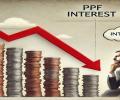
The answer depends on your financial goals and risk appetite, says Certified Financial Planner Ramalingam Kalirajan, and explains why.
Power sector firms that entered the capital market this year include Power Finnace Corp and PowerGrid Corp. Besides, there have been smaller issues from Suryachakra Power and Indowind Energy, which mopped up nearly Rs 135 crore (Rs 1.35 billion) collectively from their IPOs.
Foreign institutional investors are likely to be debarred from taking part in initial public offerings of stock exchanges, while foreign direct investment may be permitted even in pre-IPO stage.

Kamal has a crisp pen when it comes to writing short and yet powerful film dialogues. But while speaking ex tempore -- and that has been his style -- he looks every bit a confused man, observes N Sathiya Moorthy.

Three companies -- FirstMeridian Business Services Ltd, IRM Energy Ltd and Lohia Corp -- have received capital markets regulator Sebi's go-ahead to raise funds through initial public offerings (IPOs). These firms, which filed their preliminary IPO papers with the markets regulator between September 2022 and January 2023, obtained the observation letters during February 21-24, an update with the Securities and Exchange Board of India (Sebi) showed on Tuesday. In Sebi parlance, observation implies go-ahead to the company to float the initial share-sale.

India's financial sector is dominated by large government-owned and private-sector banks.

Soros, a Hungarian-American political activist, and his organisations like OSF have been accused by the ruling BJP of acting against India's interests. His utterances during the Adani-Hindenburg controversy also drew criticism from the party.

Adani Enterprises' proposed Rs 20,000 crore (Rs 200 billion) fundraising via fresh issue of equity shares through a public offer would be the fourth biggest by Indian companies, excluding banks and non-banking financial companies.
Zaggle Prepaid, Cyient DLM, Healthvista India, Rashi Peripherals and Vishwaraj Sugar Industries have obtained the green signal to launch their initial public offerings (IPOs). The approvals come at a time when capital raising by way of IPOs has slowed to a crawl, with only four issues hitting the market so far this calendar year. Recently, the Securities and Exchange Board of India (Sebi) issued final observation letters on their draft red herring prospectuses (DRHPs), which is akin to getting approval to hit the markets.
Sebi meet this weekend to also discuss physical delivery in options.

Tightening Initial Public Offering (IPO) norms, capital markets regulator Sebi on Friday cleared the proposal mandating the issuers to disclose the offer price based on past transactions and fund raising activities. In addition, the board of Sebi approved a proposal introducing an alternative mechanism by permitting "pre-filing" of offer documents for companies contemplating IPOs. Under this, an issuer should make "pre-filing" of offer documents with Sebi and stock exchanges without making it available to the public for an initial scrutiny period only.

South Korean auto giant Hyundai Motor Company is considering tax implications of listing its Indian unit before taking a final call, according to sources privy to the development. Hyundai Motor is mulling an initial public offering (IPO) for its Indian arm to raise around $3 billion (at a valuation of up to $30 billion), and talks are in the early stages between the company and bankers, banking sources revealed. Hyundai Motor India Ltd (HMIL), however, declined to comment on the development.

The National Stock Exchange of India (NSE), which is still awaiting regulatory approval for its initial public offering (IPO), is now planning to streamline the process of buying the unlisted stocks of the company, thereby reducing the time taken for such deals from about four months to just a week. The management of India's biggest stock exchange has affirmed that it is working to reduce the time taken. According to the analysts, certain approvals required at present from NSE for buying stocks, are adding to the processing time.
